

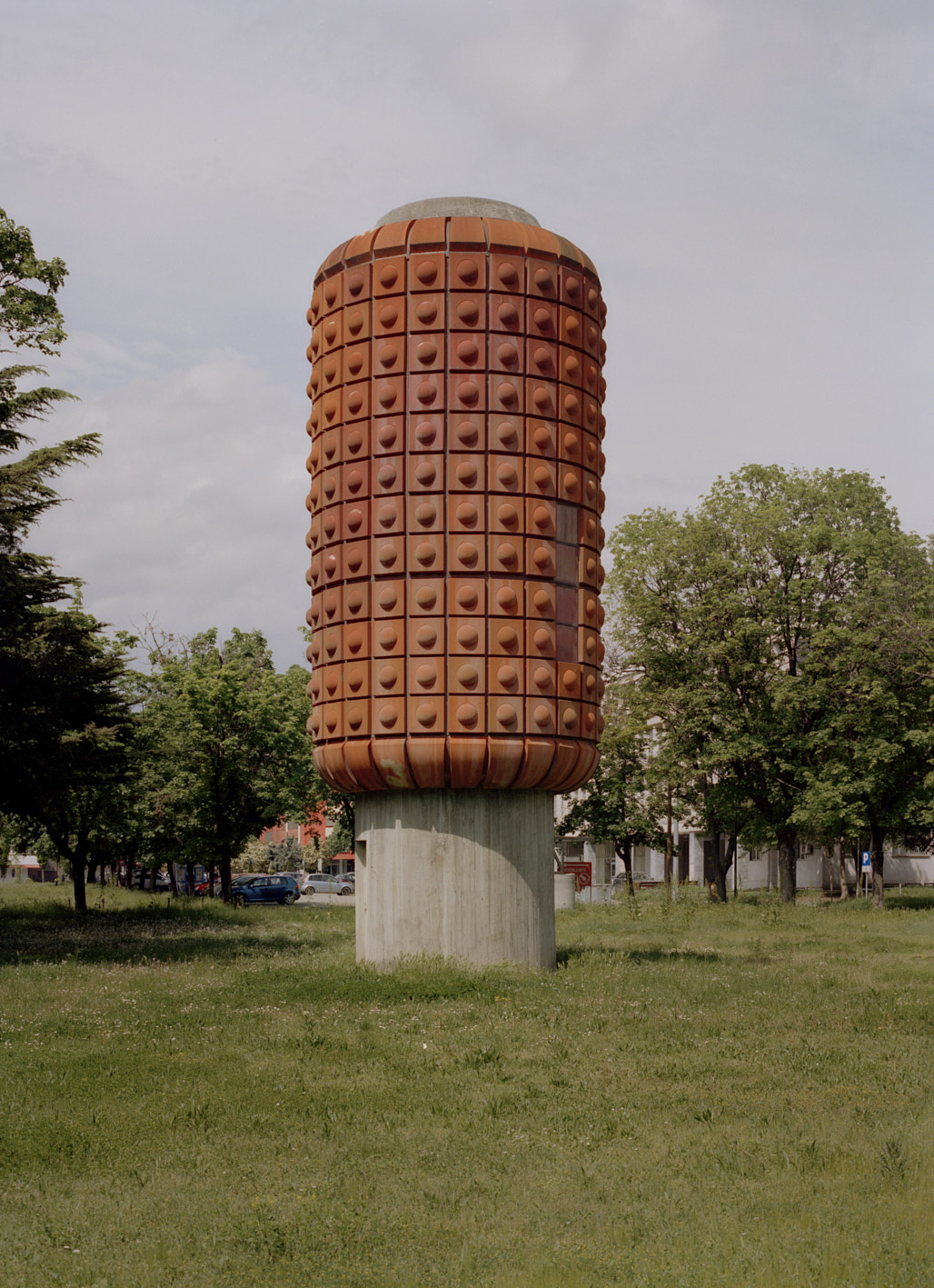
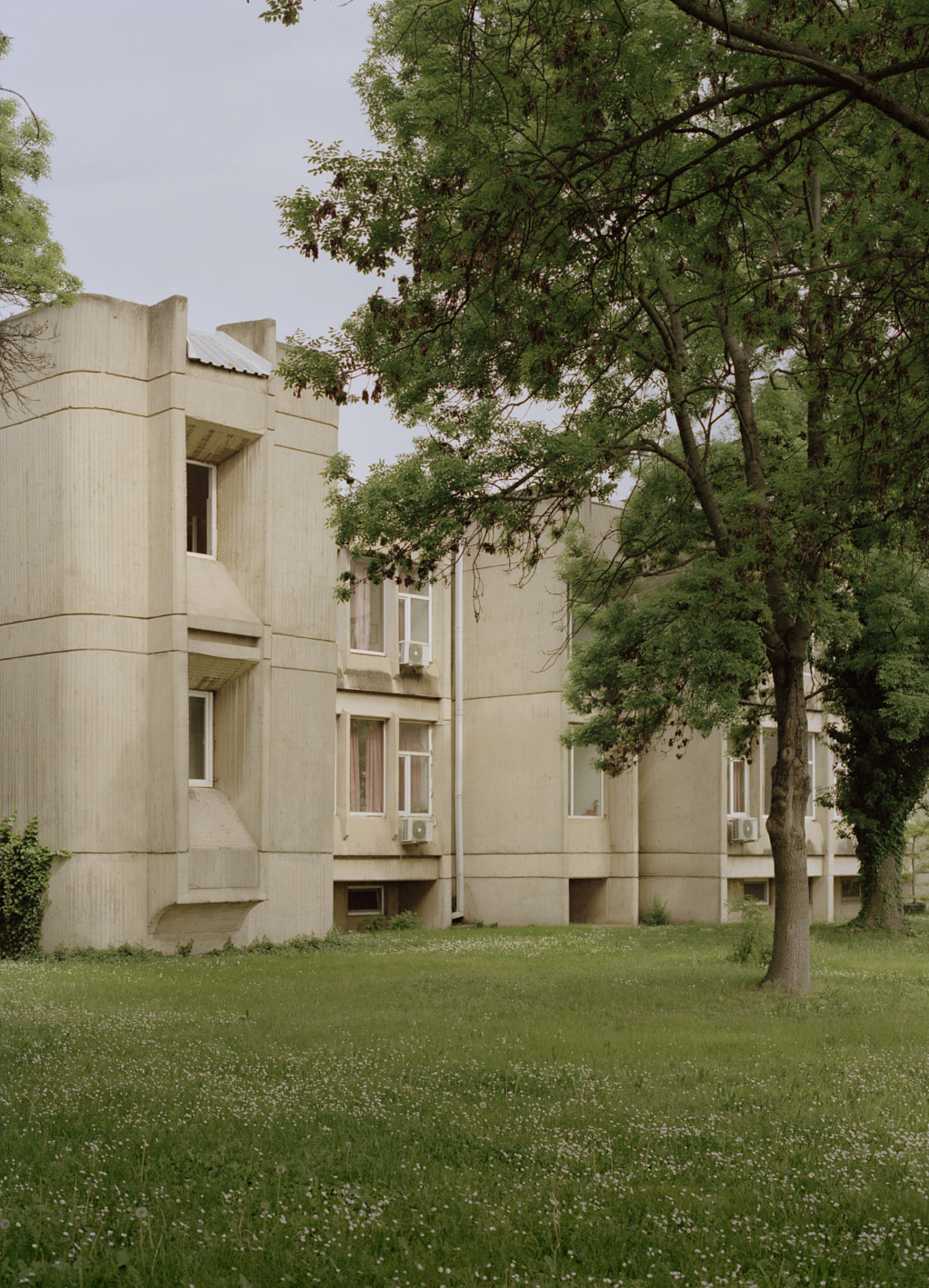


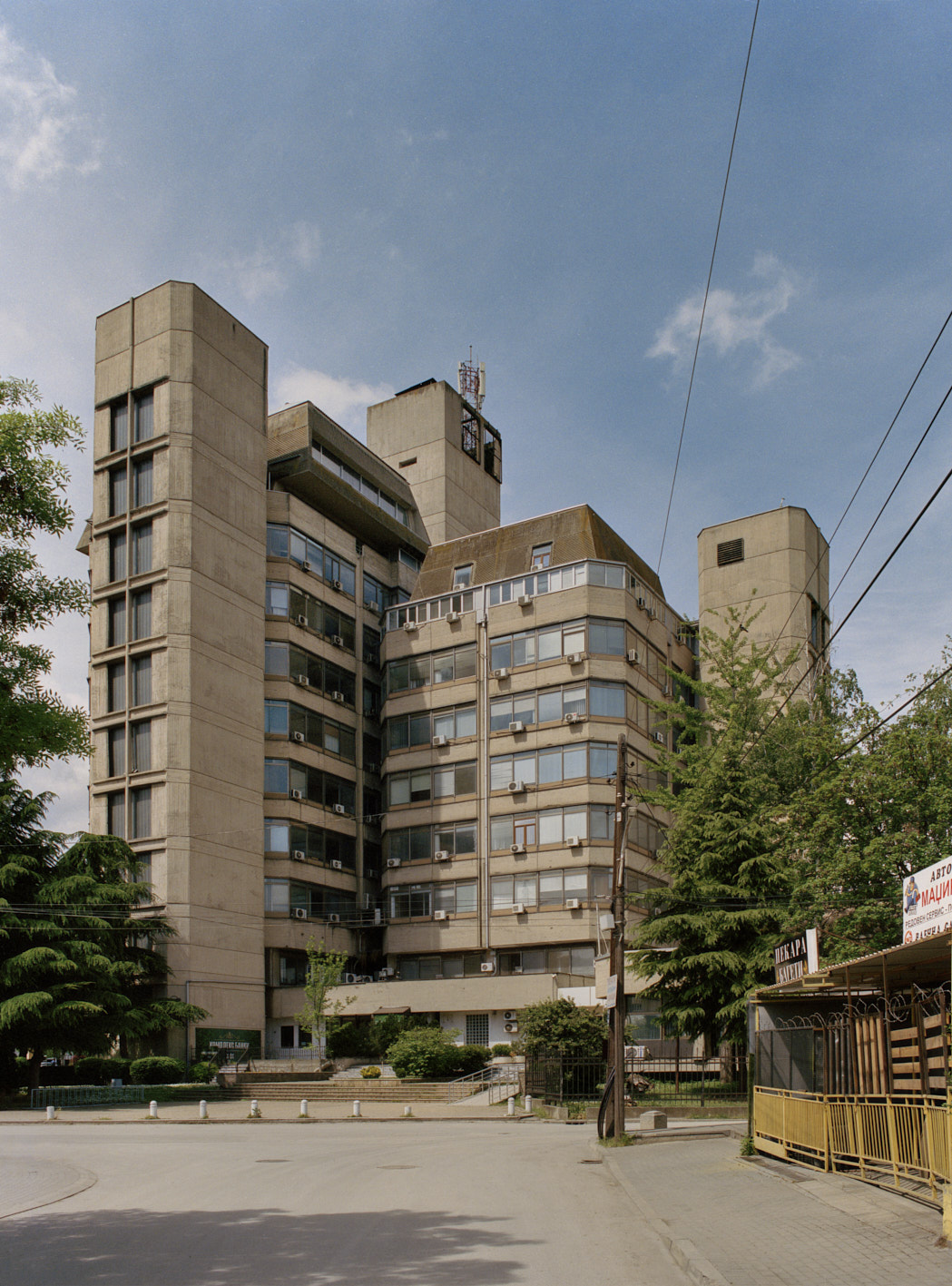


Brutalist architecture in Skopje, North Macedonia
Text by Edwin Heathcote, HTSI Financial Times
Hauntology is an idea that encompasses the notion that we are persistently unsettled by futures envisaged in the past that never materialised: doomed utopias, radical modernisms, sci-fi visions of futuristic metropolises that failed to comprehend that the cities of the 2020s would look disappointingly like the cities of the 1950s. This is true of almost everywhere. Except Skopje. The capital of North Macedonia, a small city of half a million, represents one of the most striking realisations of late modernist and brutalist urbanism, a time capsule of a remarkable, optimistic, short-lived modernist moment in architecture.
The city’s wholesale rebuilding was catalysed by a massive earthquake in 1963, which destroyed almost all of the historic city centre, killed more than 1,000 people and left 160,000 others homeless. An architectural competition was arranged (in a rare urban intervention on this scale) by the United Nations, and was won by Japanese architect Kenzo Tange (1913-2005) alongside a group of Yugoslav architects.
Tange had become renowned as the designer of the serene Hiroshima Peace Memorial Museum (1955) and as the most visible architect at the Tokyo Olympics of 1964, the centrepiece of which was his astonishing Yoyogi National Gymnasium, a work of relentless sculptural invention. His masterplan for Skopje was the first time a Japanese architect had been commissioned for such a major intervention outside Japan, and signalled a moment of radical architectural globalisation and openness – a major shift in urbanism.
The result is frankly little like what Tange intended; his ideas were diluted and his major buildings remained largely unexecuted. As so often happens with grand projects, myriad committees and political imperatives ended up dulling the vision. Yet the outcome was still extraordinary. There are enclaves of brutalist urbanism from Naples and São Paulo to Chandigarh and London (where the Southbank buildings form one of the finest surviving complexes), and these are endlessly photographed and fetishised. But there is little approaching the scale and ambition of Skopje.
This was a nationalist project with globalist intent. Yugoslavia was a non-aligned nation; its leader Marshal Tito successfully repelled the crushing weight of the USSR, and his regime managed to somehow hold together disparate nations. That freedom from the Soviet sphere encouraged other nations to contribute, not only the Japanese but the British and Americans who sent both prefabricated building components and tents in the wake of the disaster, and army engineers and troops to erect them. The Soviets and Bulgarians, too, provided aid; even Picasso donated a painting to the new Skopje Museum of Contemporary Art.
Tange was a leading proponent of a peculiarly Japanese architectural movement called metabolism. It was a unique combination of megastructures and modular buildings, an idea of a vast concrete city that could grow and evolve like a living organism with new modules slotted in and rearranged as the needs of the metropolis changed. One of its finest monuments, Tokyo’s Nakagin Capsule Tower, was demolished in 2022. Ironically metabolism’s greatest moment was realised in a small, faraway Balkan city.
Tange’s original plan for Skopje showed a central core of vast megastructures, modular mountains of concrete vertically connected by huge cylinders for circulation. Pedestrian routes were elevated above freeways, midcentury-style; on one side of the city, a row of slab housing blocks evoked the lost medieval city walls. A few of these elements survived in little echoes of the original design but eventually the individual buildings were parcelled out to other, mostly Yugoslav, architects. Tange’s only major building here was the station and transportation centre, which was completed in 1981 but in a much-reduced and debased form.
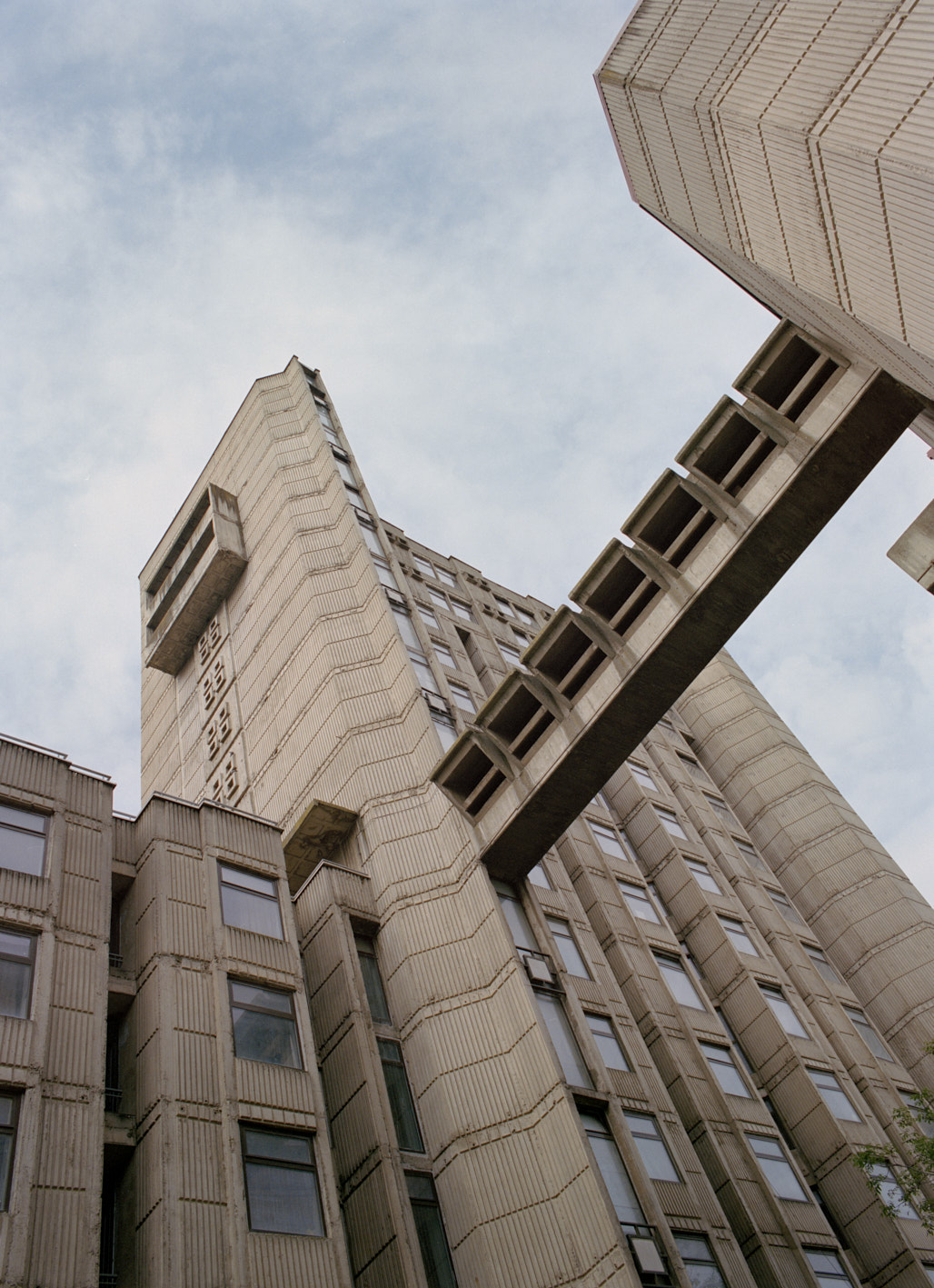
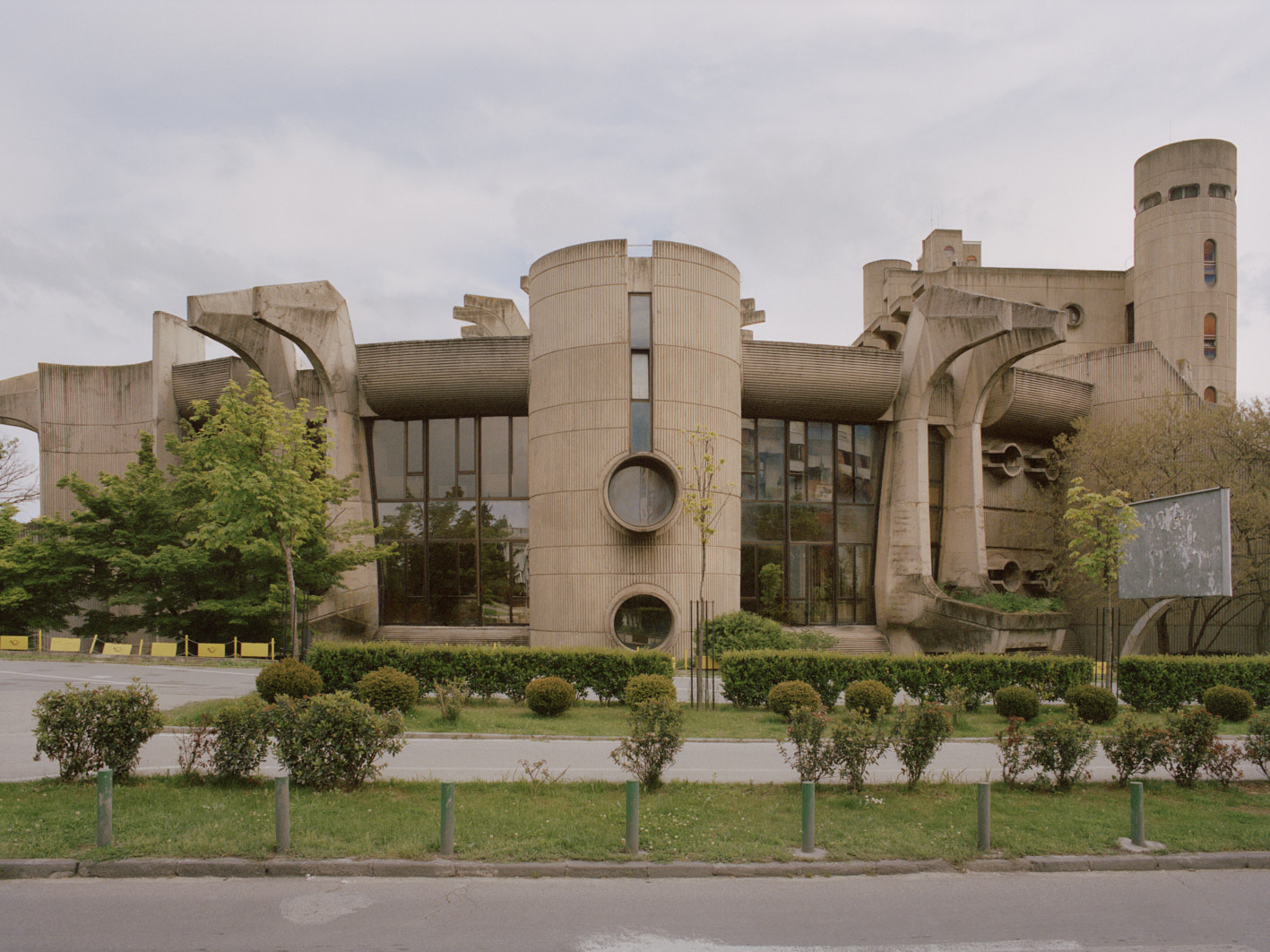
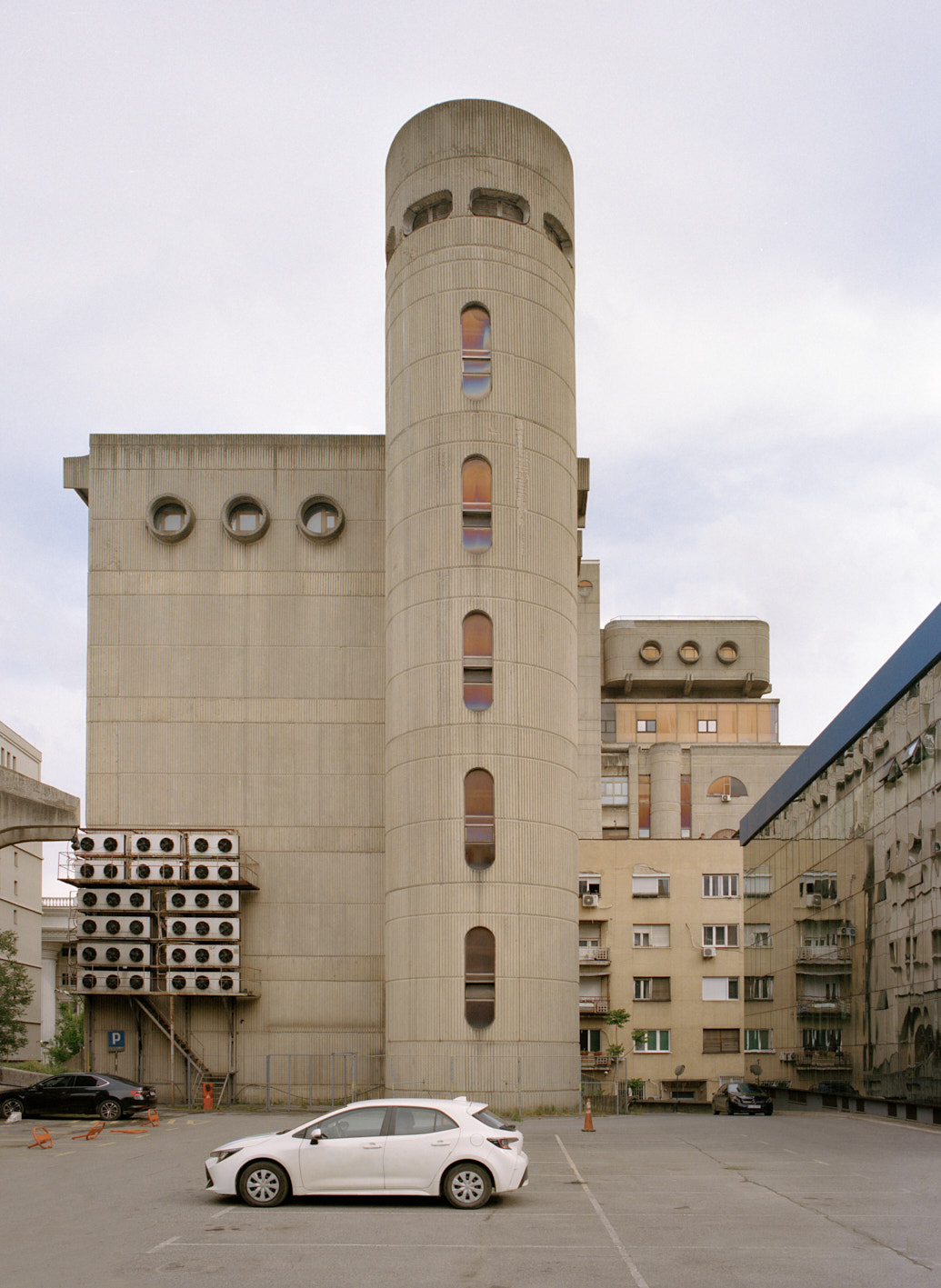
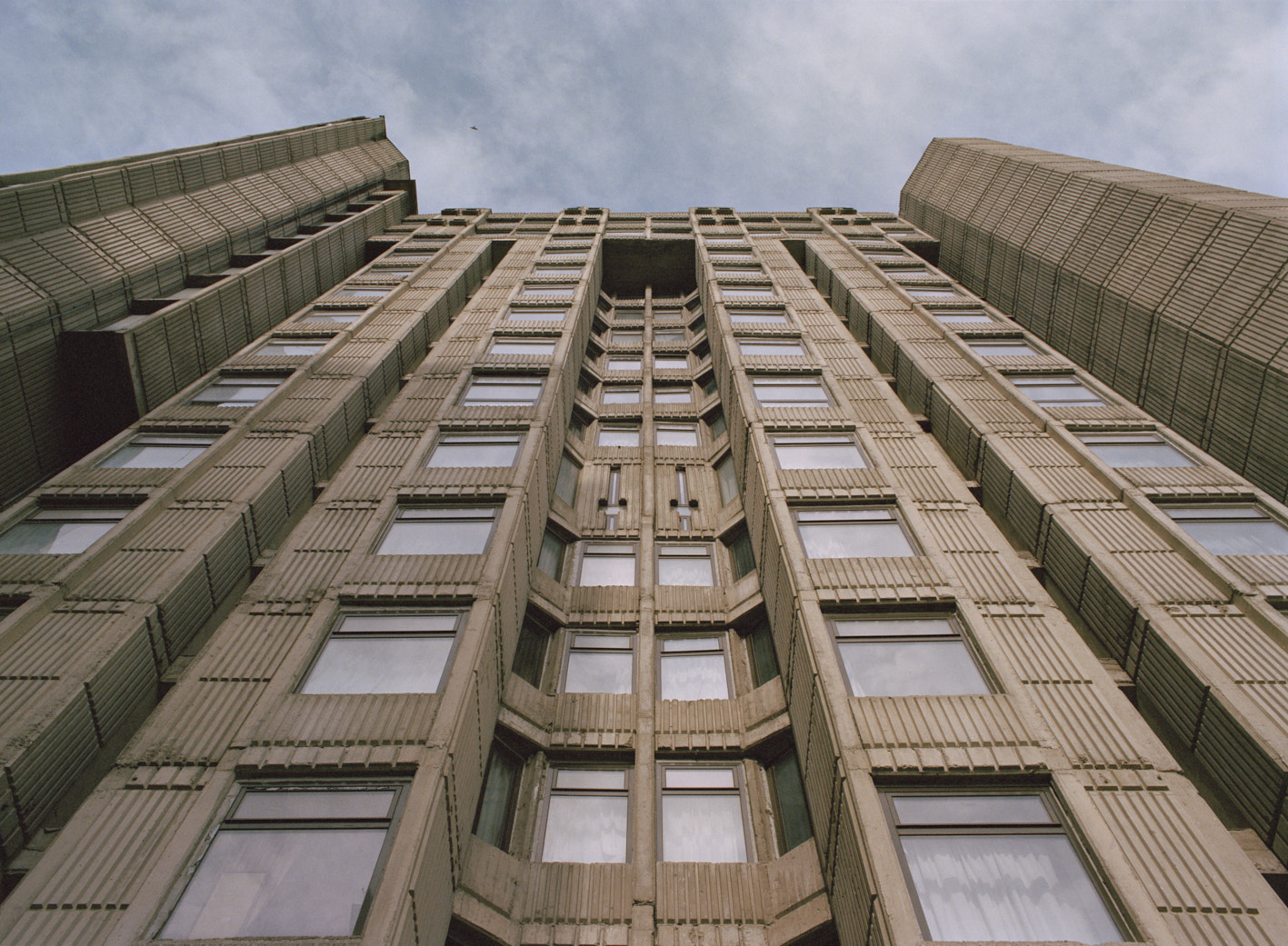
Nevertheless, the spirit of his metabolist vision survived, and then some. Take the astonishing Central Post Office (designed by Macedonian architect Janko Konstantinov, 1979-81), which embodies some of Tange’s central design ideas; the concrete cylinders, the sculptural volumes – but in a form that also imbibes the castles and fortifications of a neighbourhood historically torn by wars and sieges. The same architect’s Telecommunication Office Building (1972-74) evokes the old city’s neoclassical arches and arcades, but spices them up with space-age concrete extrusions and funky sculptural modular window openings. Elsewhere vast slabs such as Georgi Konstantinovski’s 1971 student dormitory building, with its corduroy concrete and finely modelled recesses and bays, echoes big brutalist monsters like Ernő Goldfinger’s Trellick and Balfron Towers in London, but arguably with a more urbane finesse. That skill in handling form reminds us that Konstantinovski studied under concrete supremo Paul Rudolph at Yale in the 1960s. Finally, the National Bank of North Macedonia building by Radomir Lalović and Olga Papeš is a reminder that when female architects were barely credited in the west, communist eastern Europe was often keen to trumpet its own.
But it is not the individual buildings that make Skopje such a remarkable sight; rather the collective effect of what is perhaps the only brutalist metropolis. That effect was diluted as part of an ill-conceived reconstruction programme named Skopje 2014, when the government instituted a series of interventions in a commercial classical style intended, misguidedly, to make the city look more historic, with the added froth of a layer of kitsch nationalist sculptures. The result is radically inappropriate and eerily artificial, a sugary wedding-cake riposte to the rough, grey grit of the brutalist rebuilding. Plenty survives, though, which hints at that future that never quite arrived. Brutalist Skopje looks paradoxically like both the very distant past and the very distant future. And Stefan Giftthaler’s photos here, simultaneously intimate and epic, convey some of that combination of future pasts in their quality, like images remembered from a long-gone era that promised so much.